

The COSP11 Multi-Sectoral Private Sector Platform Dialogue
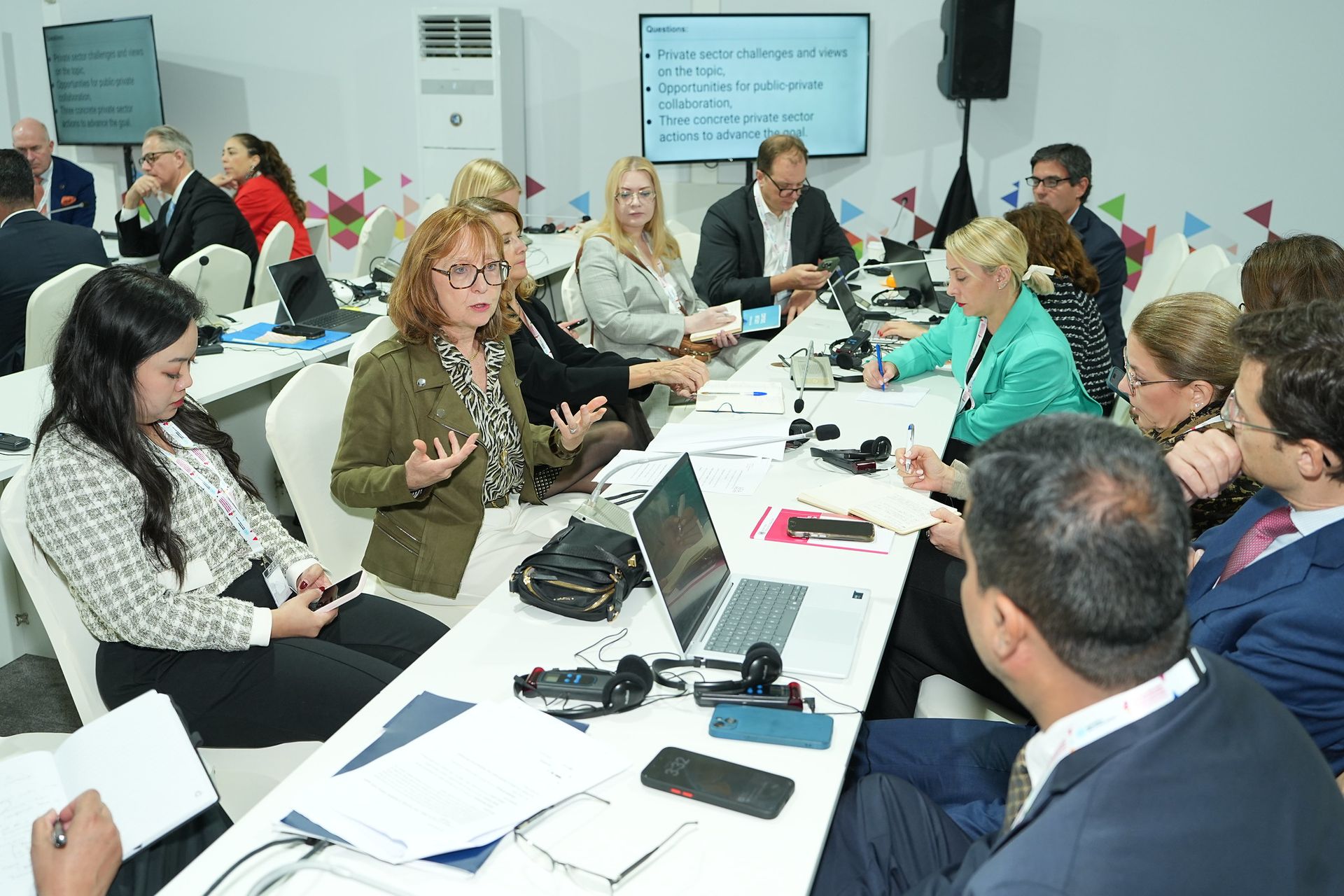
As part of its inaugural activities, the Private Sector Platform convened a multi-sectoral dialogue on private sector commitments to strengthen anti-corruption efforts, and identified priority initiatives to be developed into concrete projects in the coming years. The dialogue brought together a broad coalition of stakeholders to discuss government updates and priorities related to COSP resolutions relevant to the private sector, practical implications for the private sector, and to explore potential areas for public-private collaboration.
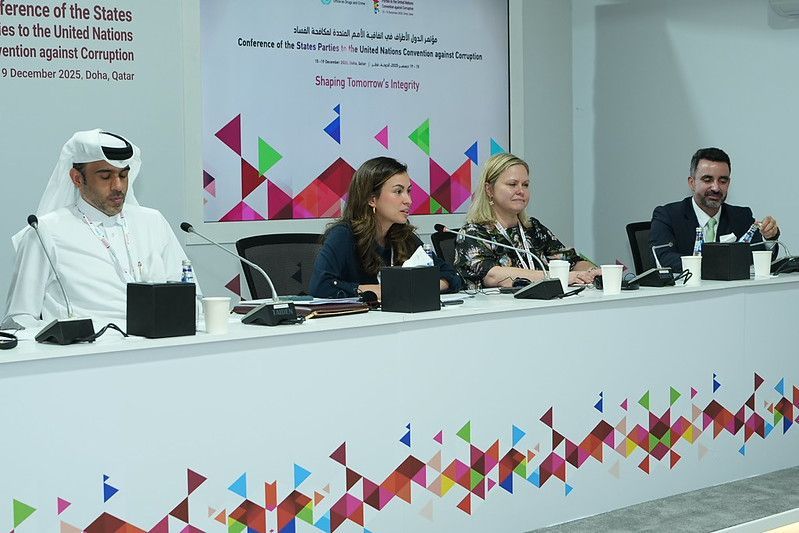
The dialogue opened with powerful interventions from Ms. Maria Adomeit, Chief (OiC), Thematic Support Section, Corruption and Economic Crime Branch at UNODC and Ms. Cristina Ritter, Head of Governance and Anti-Corruption at the UN Global Compact, that framed the urgency of the moment - from the rise of AI-enabled corruption risks to the growing sophistication of global fraud, while recognizing the importance of structured and sustained dialogue between governments and businesses to support effective anti-corruption efforts. Speaking at the session, H.E. Mr. Jassim Yaaqob Al-Hamadi, Ambassador of Qatar and Permanent Representative to the United Nations in Vienna, highlighted the rising importance of AI and digital technologies in tackling complex corruption and economic crime risks, stressing the private sector’s key role in their responsible development and use. He further urged the COSP Private Sector Platform to engage on this issue as it advances its work. In her introductory remarks, Ms. Stephanie Cameron, First Secretary and Alternate Permanent Representative of the United Kingdom of Great Britain and Northern Ireland to the United Nations in Vienna, emphasized the increasing impact of global fraud and the need for stronger public-private cooperation to combat increasingly sophisticated, technology-enabled schemes.
Structured around key COSP11 resolutions, the dialogue tackled three interconnected themes where government and business must act together:
Addressing corruption and environmental crimes, discussions exposed how corruption enables environmental harm across forestry, extractive industries, agriculture and global supply chains. From the private sector’s viewpoint, effective regulation needed to be clear, consistent and realistic. While baseline standards for sustainability and integrity were deemed necessary, overly strict or inflexible rules could make implementation difficult across different countries. A balanced approach with minimum standards that can improve over time was seen as more practical. The discussions explored collective action, certification schemes and integrity education as practical responses to this challenge.
On incentives for private sector integrity, participants highlighted that integrity measures are often seen by companies as costly or punitive, limiting their effectiveness. In this regard, participants pushed to reframe compliance from being viewed as a cost burden, to a driver of value, competitiveness and ESG alignment. They added that incentives such as procurement advantages, tax benefits, reduced bureaucracy and reputational recognition could encourage adoption, while addressing the need for practical tools and training by SMEs. Additionally, strong public-private collaboration was underscored as key, with co-designed frameworks and shared dialogue helping align government and business approaches and strengthen a culture of integrity.
In the area of data, transparency and digital solutions, participants stressed that data, transparency and measurement were essential for effective anti-corruption efforts but highlighted that access to reliable and comparable data remains limited. Greater transparency from public authorities, especially in procurement, climate data and enforcement, was seen as crucial for better risk assessment. International standards could improve consistency across sectors and countries while digital tools offered strong potential to enhance data collection and analysis, even in low-resource settings. Public-private collaboration was mentioned as key to developing shared tools, indicators and safe data-sharing and whistle-blowing systems. Finally, youth engagement and innovation were highlighted as important drivers for advancing transparency and integrity efforts.
10 Actions to Drive Change
Key takeaways from the dialogue included the value of collective action, the need for practical and proportionate approaches and ongoing collaboration between governments and businesses to strengthen integrity and effectiveness. The following proposed actions reflect shared areas of focus where governments, the private sector, and other stakeholders can work together in support of UNCAC implementation and relevant COSP11 resolutions:
Action 1: Public-private supply chain partnerships
Action 2: Realistic sustainability standards for a level playing field
Action 3: Integrity-backed certification schemes
Action 4: Integrity education beyond policy
Action 5: Compliance as a business asset
Action 6: Integrity as a driver of innovation
Action 7: Incentives for voluntary integrity measures
Action 8: Aligning public and private compliance languages
Action 9: Global standards for shared trust
Action 10: Data & technology for corruption prevention
Looking ahead
The COSP Private Sector Platform is designed for the long game, enabling year-round coordination and Collective Action between COSP sessions. What started in Doha is only the beginning. The private sector now has a structured home within COSP for fostering public-private collaboration around UNCAC implementation, for turning shared commitments into practice, and for building the culture of integrity that tomorrow demands.
----------------------------------------------------------------------------------------
Click here to access the Outcome Document of the Multi-Stakeholder Dialogue.
Access the Flickr Album to see some highlights from the Multi-Stakeholder Dialogue.